
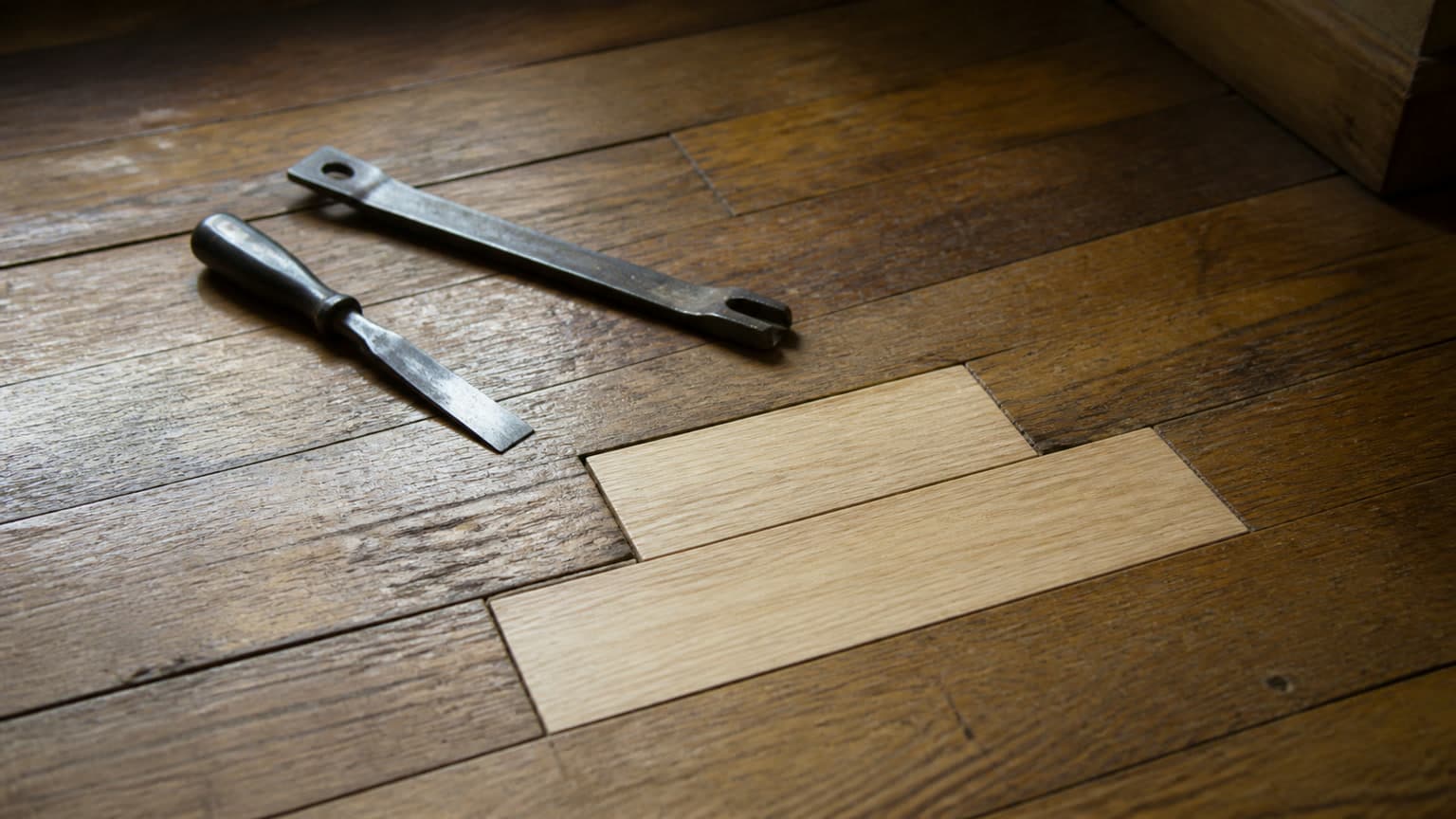
A damaged section of hardwood flooring cut out and replacement boards being woven into the surrounding floor
Wood floor repair

Wood floor repair in Staten Island

Repair deals with a specific problem in a floor that is otherwise sound, rather than treating the whole surface. Most floors people assume are finished turn out to need a repair and not a replacement.

Start with what actually went wrong

Almost every wood floor problem is one of a small number of things, and each has a different fix. Naming it correctly is most of the work, because the wrong repair either fails or makes the next one harder.

It also decides whether this is a repair at all. Damage in one area of an otherwise good floor is a repair. The same damage across most of the floor is a refinish or a replacement, and pretending otherwise wastes your money on patches that will not blend.

What we are usually called about

Four problems account for most of the repair work in houses here.

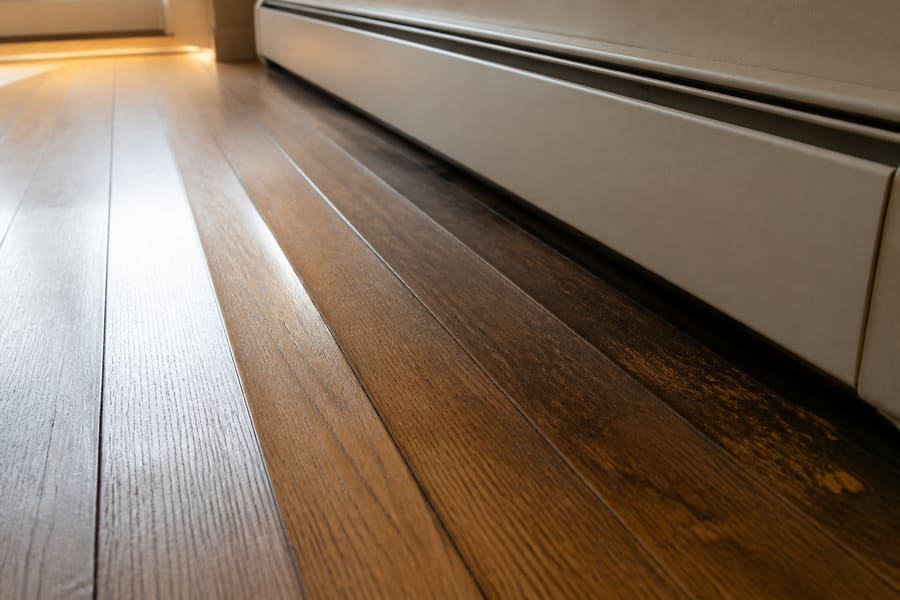
Hardwood boards cupped and darkened where water has reached them near a radiator

Water damage and cupping

Boards that have taken on moisture swell at the edges and rise into a shallow curve. A dishwasher, a radiator, a leaking window or a damp basement below are the usual sources. The leak is fixed first, then the floor is given time to dry, because sanding a cupped board that is still wet leaves it dished once it finally settles.
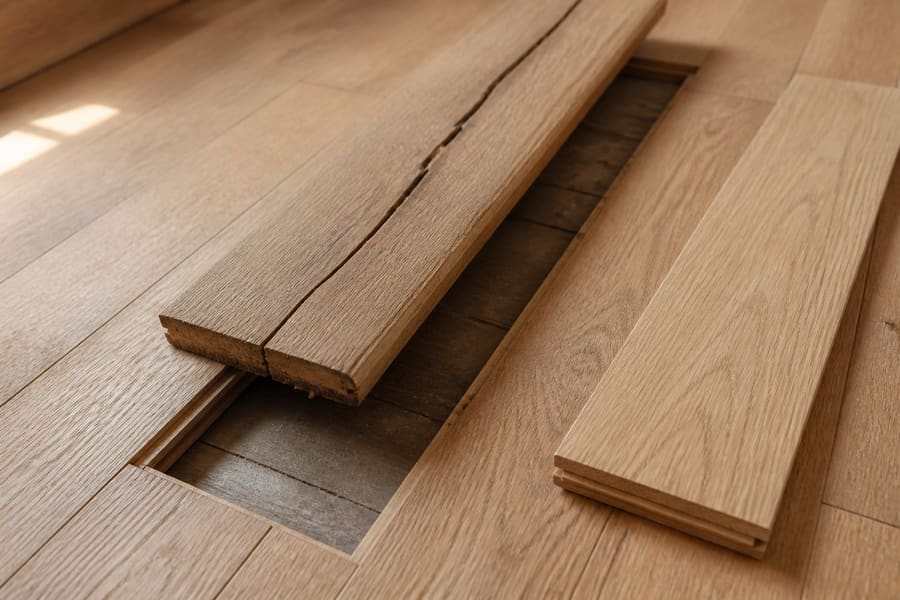
A split hardwood board being lifted clear so a matching replacement can be fitted

Split, loose and damaged boards

Individual boards are cut out and replaced, with the replacements woven into the surrounding rows rather than laid as a block, so the joint pattern stays random. New wood is then blended into the existing finish.

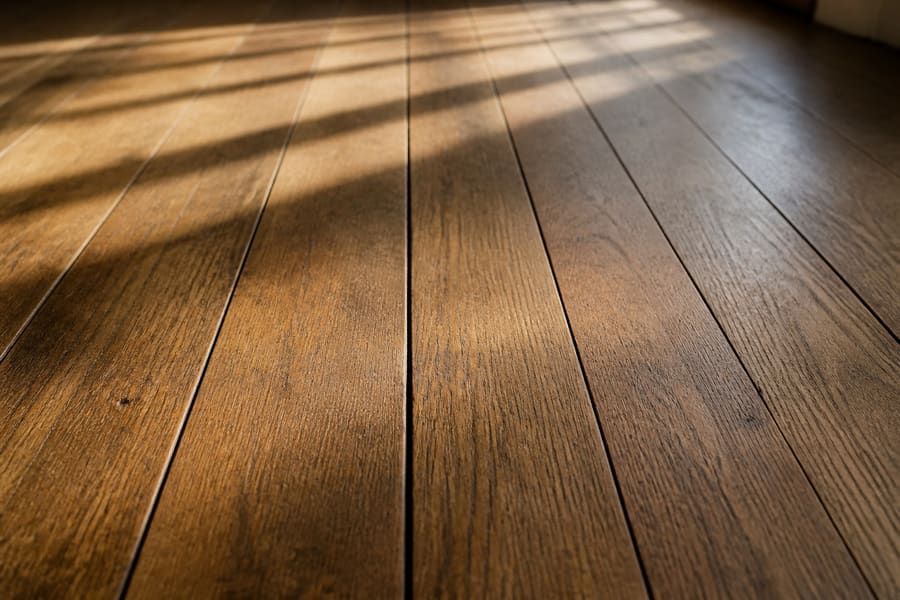
Seasonal gaps opened between hardwood floorboards in a Staten Island home

Gaps and squeaks

Gaps that open in winter and close in summer are the floor breathing and are usually left alone. Gaps that never close can be filled or have slivers fitted. Squeaks are movement between the board and the joist below and are fixed by refastening rather than by filling.

About matching

This is the honest part of any repair conversation. New wood does not look like old wood, and it is not supposed to straight away.

The species and the cut can be matched. The colour can be brought close with stain. What cannot be matched immediately is what decades of light have done to the boards around it, because wood darkens or ambers over time and a new board starts where the old one did.

There are two ways this ends well. Either the repair is in a spot where a slight difference does not read, such as under furniture or at the edge of a room, or the whole floor is refinished after the repair so everything takes the same finish on the same day. That second option is why repairs and refinishing are so often booked together.

What we will not do is tell you a patch will be invisible when it will not be. You would notice, and you would notice on the day.

Send a photograph of the damage and the area around it, and we will tell you whether it is a repair or something larger.

Call (929) 207-0785

How a repair runs

  1. Find the cause

    A repair over a live leak or an unresolved damp problem fails. If the source is still active, that gets dealt with first, even when it is not our work.

  2. Let it dry and settle

    Water damaged wood is left to reach a stable moisture level before anything is cut or sanded. Some cupped boards flatten out on their own during this and need no replacement at all.

  3. Cut out and replace

    Damaged boards are removed cleanly and replacements fitted with staggered joints so the repair does not read as a rectangle.

  4. Blend

    The new wood is sanded flush and coloured toward the surrounding floor, then finished. Where the repair is large or in a prominent spot, refinishing the whole room is what makes it disappear.

Questions people ask about repairs

Can you replace just a section of hardwood floor?

Yes, and it is usually the right answer when the rest of the floor is sound. The damaged boards are cut out and new ones woven into the existing rows so the joints stay staggered.

The part worth being realistic about is colour. Replacement boards start out looking new next to boards that have aged for years, and stain gets them close rather than identical. If the section is somewhere obvious, refinishing the whole room after the repair is what makes it read as one floor.

Where the damage is spread across most of the floor rather than concentrated in one area, patching stops being economical and a new floor is the better use of the money.

What often follows a repair

Hardwood floor refinishing

Refinishing after a repair puts the same finish on new and old wood on the same day, which is what makes a patch disappear.

Buff and recoat

Where the repair was small and the rest of the finish is still sound.

Something wrong with your floor

Call and describe it, or send photographs of the damage and what is around it.

Call (929) 207-0785