
Hardwood floor refinishing
The full sand, for grey traffic paths, deep scratches, water marks or a colour change.
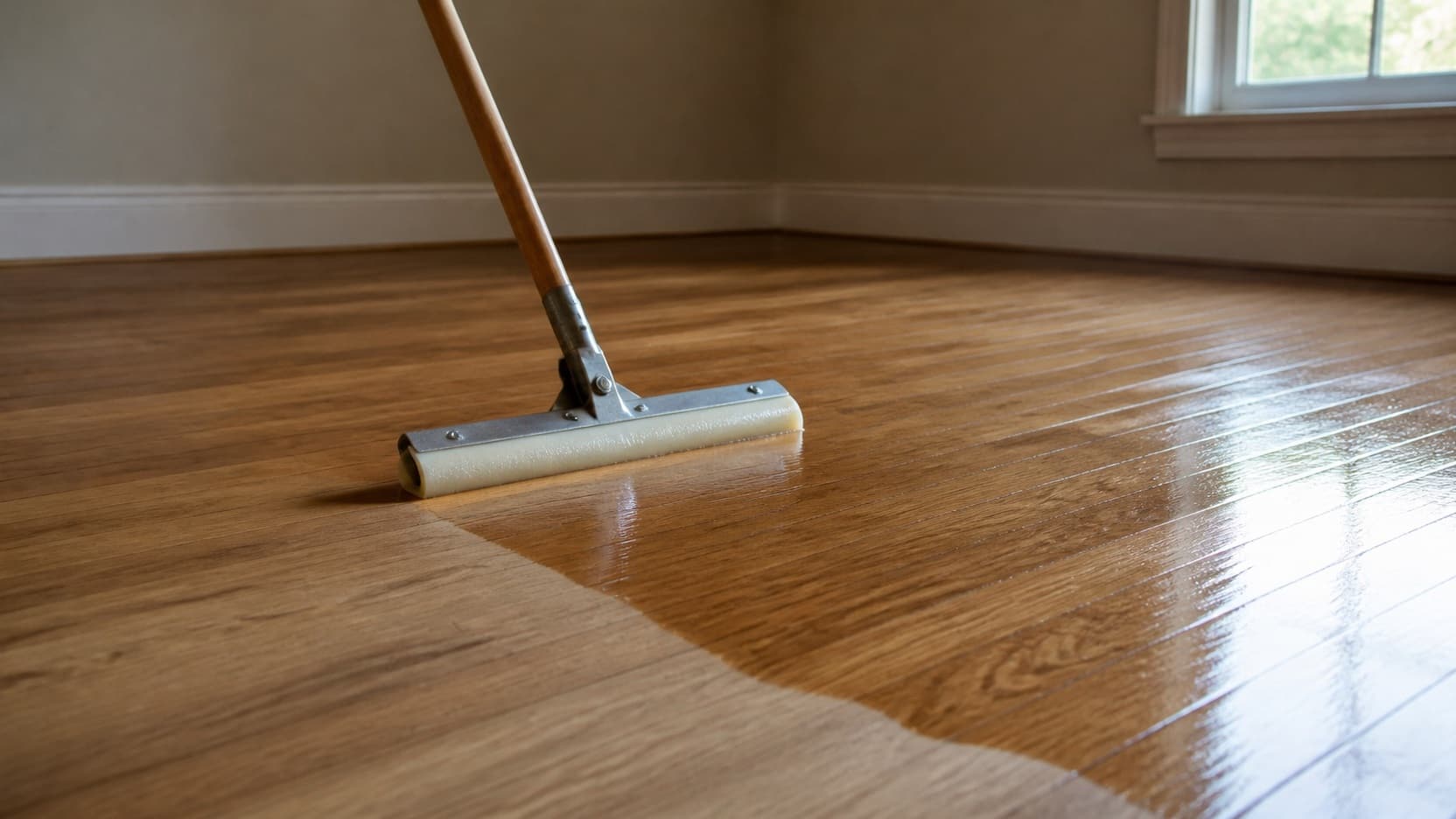
A buff and recoat abrades the existing finish and lays a fresh coat over it. The wood underneath is never touched. When it is the right answer it is the best value job in flooring, and when it is the wrong answer it is money thrown away.
A wood floor wears from the top down. The finish takes the traffic first, and for years it is the finish alone that dulls, scuffs and thins. The wood below it stays exactly as it was.
A buff and recoat works on that layer only. The existing finish is abraded so a new coat will key to it, the floor is cleaned thoroughly, and one or two fresh coats go on. The result is an even, protected floor with its shine back.
It is not a refinish. No wood is removed, so nothing that lives in the wood is affected. That is the whole distinction, and it is the thing worth understanding before you spend anything, because it decides which of the two jobs you actually need.
There is a simple test you can do yourself before anybody visits.
Find the dullest, most walked on patch. If it is dull but the wood still looks like wood, the wear is in the finish and a recoat will fix it. If the wood itself has gone grey, or is stained dark where water sat, the damage is below the finish and a recoat will seal that in rather than remove it.
A drop of water on a floor with finish left on it will sit as a bead. If it soaks in and darkens the wood within a minute or two, the finish is already gone in that spot and the wood is exposed. Bare patches mean the recoat window has passed on that area.
Run a fingernail across a scratch. If it catches, the scratch is in the wood and it will still be there after a recoat, just under a fresh coat. Scratches you can see but not feel are in the finish and disappear.
Any bare wood, grey traffic paths, water staining or deep scratching means the floor has moved past a recoat and into a full sand. We would rather tell you that at the start than take payment for a job your floor cannot use.
It cannot change the colour. The stain is in the wood and the wood is not being touched, so a floor that is currently mid brown stays mid brown. Changing colour needs the full sand.
It cannot remove scratches that have reached the wood, or the grey patches that show where the finish gave up entirely. Coating over those makes them permanent and slightly darker.
It cannot flatten cupped or lifted boards, close gaps, or fix anything structural. Those are repairs, and they happen before either job.
What it does do is add years to a floor that is still in good condition, for a fraction of the cost and disruption of sanding it. Done on a sensible cycle, a floor can be recoated several times before it ever needs a full refinish, which is how a wood floor lasts as long as it should.
It is a short job. That is most of the appeal.
The tests above, done properly, across every room rather than in one spot. One bare patch in a doorway can change the answer for the whole floor.
This is the step that decides whether the new coat holds. Any wax, polish or residue from an oil based cleaner has to come off completely, because a fresh coat will not bond through it.
A fine abrasive pad takes the gloss off the existing finish and gives the new coat something to grip. Very little dust, and no drum sander.
One or two coats depending on how worn the floor was and what finish is on it. Between coats the floor is left alone.
Try the water drop test on your worst patch and tell us what it did. That usually settles which job you need.
Call (929) 207-0785Most floors here are in houses people own and have lived in for a long time. That is exactly the situation where a recoat is either brilliant or too late, and the difference is a few years of noticing.
A floor that gets recoated while its finish is still intact essentially never needs sanding. A floor that is left until the traffic paths go grey has already spent wood that cannot come back, and the only remaining option is the full job.
So it is worth looking now even if the floor seems fine. The best time for this job is a couple of years before you would have thought to ask about it.
Refinishing means sanding the floor back to bare wood and building a new finish from scratch. Resurfacing, buffing and recoating, and screen and recoat all describe the same lighter job, which abrades the existing finish and adds a fresh coat on top without touching the wood.
The practical difference is what each one can fix. Refinishing deals with anything in the wood. A recoat deals only with what is in the finish. That is why the question is worth answering before choosing, rather than after.
Not in any way that lasts. Stain colours the wood itself, so reaching the wood means removing the finish that is covering it, and that is sanding.
There are tinted coatings that sit on top of the existing finish and shift the tone slightly. They are a coating rather than a stain, they wear differently from the floor underneath, and they make any future recoat more complicated. For a real colour change, the full sand is the honest answer.
Where there is enough wood left to sand, refinishing is normally the cheaper of the two and it keeps the boards you already have, which on an older house are often better than anything sold now.
Replacement becomes the answer when the wood has run out, when boards are damaged beyond repair across a large area, or when the floor is a thin engineered board with no wear layer left. At that point sanding is not a cheaper option, it is simply not an available one.
And where the finish is worn but the wood is sound, a recoat is cheaper than either. That is the case this page is about, and it is the one most often missed.
The tests above point to one of these instead.
The full sand, for grey traffic paths, deep scratches, water marks or a colour change.
Cupped, split or loose boards, dealt with before any coating goes anywhere near them.
When the tests show there is no wood left to work with, a new floor is the honest answer.
Describe the worst patch, or send a photograph of it, and we will tell you honestly which job it is.